
The biggest barrier to mental health care today isn't stigma — it's cost.
We help people afford consistent therapy by covering the gap between what they can pay and what it actually costs.
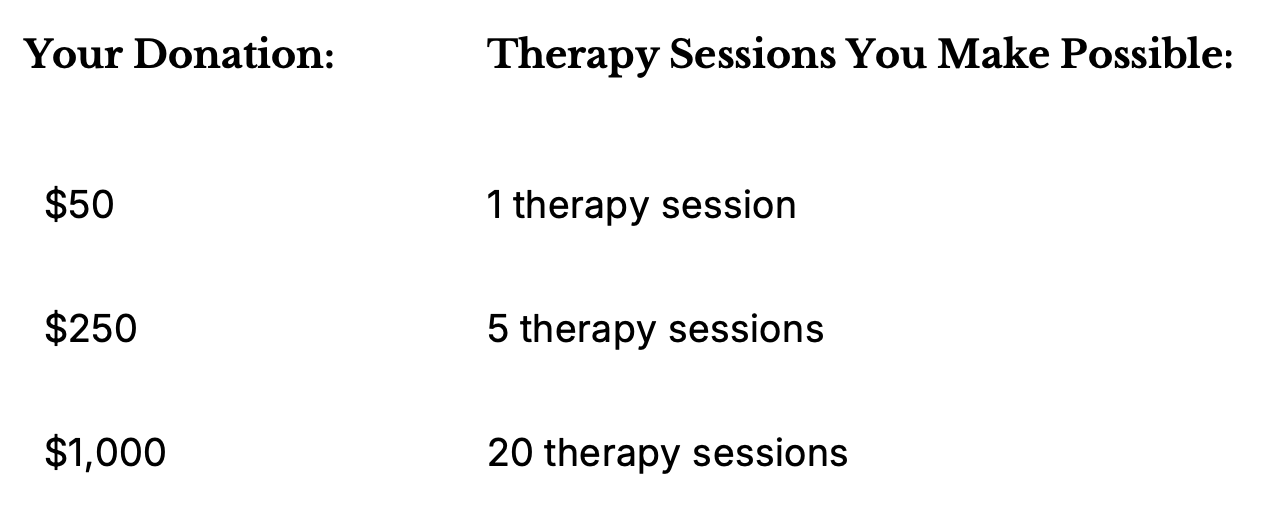
$50 covers one therapy-session gap.
Your donation covers the cost difference so clients who need support can receive the care they need.

Here’s a concrete example of
what the gap looks like:
An average therapy session costs $85:
client pays $35 → MHI donors cover the remaining $50
The client keeps their therapist.
The therapist gets paid in full.
Nobody bears the cost alone.
The data behind the gap:
Mental health disorders are up to twice as common among people facing financial hardship —yet cost is the #1 reason care gets delayed or dropped.
Evidence indicates that mental health disorders are 1.5 to 2 times more prevalent among low-income populations.
In 2022, 2.1 billion people globally faced financial hardship, including 1.6 billion people living in poverty or pushed deeper into poverty due to out-of-pocket health expenses.